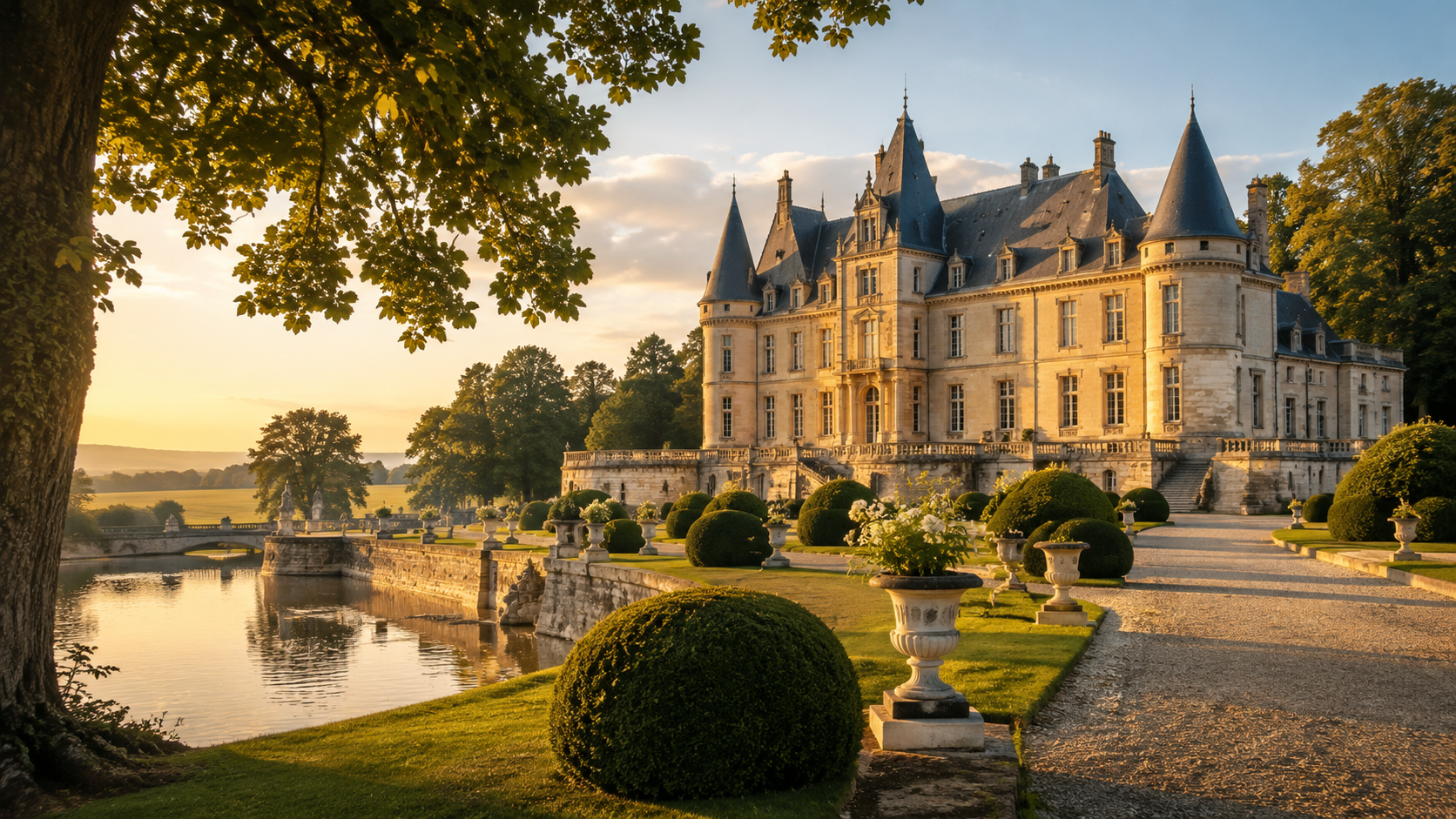
Why International Buyers Are Investing in French Châteaux
French châteaux have fascinated international buyers for generations.
But today, interest extends far beyond the traditional image of owning a romantic country estate.
Buyers from the United States, United Kingdom, Australia, Canada, the Middle East and across Europe are looking at French châteaux for lifestyle, heritage, hospitality and long-term property projects.
French châteaux offer something genuinely unique
A château is not simply a large house.
It may represent hundreds of years of French history and architecture.
Stone façades, towers, formal reception rooms, grand staircases, original fireplaces, parks, lakes and outbuildings create a type of property that is extremely difficult to reproduce.
For many international buyers, this uniqueness is part of the attraction.
More property for your budget
Compared with prime property markets in cities such as London, New York, Sydney or Paris, certain regions of France can offer extraordinary amounts of space and architecture for the money.
A budget that might purchase an apartment in a global city may potentially provide a substantial French country estate.
Of course, running costs and renovation must always be considered.
But from a lifestyle perspective, French châteaux can offer exceptional value.
France remains internationally attractive
France combines architecture, culture, food, wine, countryside and infrastructure in a way that continues to appeal strongly to overseas buyers.
High-speed rail links, international airports and France's central position within Europe make many regions surprisingly accessible.
Buyers can choose between very different lifestyles:
Normandy and Brittany;
the Loire Valley;
Burgundy;
Champagne;
Dordogne;
Provence;
Occitanie;
the Atlantic coast;
and many other areas.
Châteaux can serve multiple purposes
The modern château buyer is not always looking for a traditional private residence.
Properties may also be purchased for:
weddings and events;
boutique hotels;
chambres d’hôtes;
retreats;
equestrian projects;
holiday rentals;
or multi-generational family estates.
The combination of lifestyle and commercial potential can make certain properties particularly attractive.
However, business potential should always be analysed realistically rather than assumed.
Heritage and long-term ownership
Many buyers are also drawn to the idea of becoming custodians of an important property.
Restoring and preserving a château can be enormously rewarding.
Rather than buying a standard luxury home, the buyer is acquiring a property with identity, history and often a strong connection to the surrounding community.
Not every château is a good investment
A beautiful building does not automatically make a good purchase.
Location, condition, operating costs, renovation exposure and resale potential remain crucial.
The best acquisitions usually combine emotional appeal with solid practical fundamentals.
A highly specialised property market
The French château market requires a different approach from conventional residential property.
Understanding which properties represent genuine opportunities and which may hide significant costs can make an enormous difference.
For international buyers, local representation can also help navigate agency relationships, property visits and negotiations.
Looking for a French château?
If you are searching for a château, manor house or country estate in France, I can help you identify properties that match both your lifestyle and investment objectives.