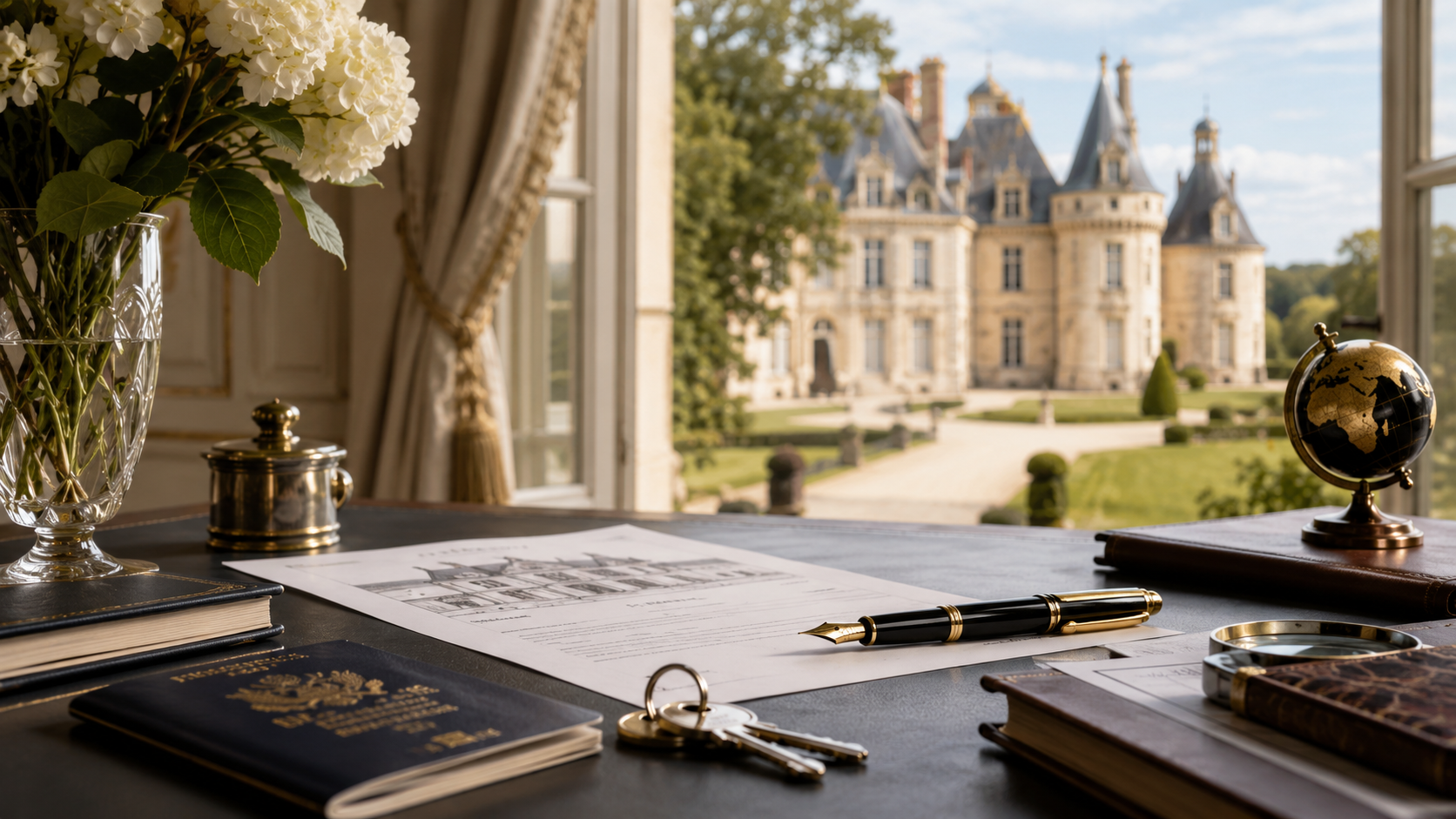
Buying Property in France as a Foreigner: How the French Buying Process Works
Buying property in France as a foreigner is entirely possible and attracts buyers from the United States, United Kingdom, Australia, Canada and many other countries every year.
Whether you are looking for a château, country estate, luxury villa or second home, understanding the French property buying process can make the experience considerably easier.
Can foreigners buy property in France?
Yes.
There is no general requirement to be a French resident in order to purchase property in France.
However, international buyers should consider the legal, tax and financial implications of owning property abroad.
Your nationality, country of residence, personal circumstances and the intended use of the property may all influence the advice you receive.
Step 1: Define your property search
Before contacting agencies, establish clear criteria.
Consider:
overall budget;
geographical area;
style of property;
number of bedrooms;
amount of land;
renovation tolerance;
proximity to airports and stations;
access to healthcare;
and whether the property will be residential or commercial.
For château buyers, additional considerations may include guest houses, stables, event space, lakes, woodland or commercial potential.
Step 2: Search and arrange viewings
The French property market is fragmented.
Properties may be listed with one agency, several agencies or occasionally marketed discreetly through professional networks.
This can make searching from overseas time-consuming.
Having one person coordinate agencies and visits can help create a much more efficient search.
Step 3: Make an offer
Once you identify the right property, you can submit an offer.
Price is naturally important, but the strength of your overall position can matter too.
The seller may consider factors such as:
financing;
proposed timescale;
conditions attached to the offer;
and your readiness to proceed.
The objective is to make an offer that is competitive without overpaying.
Step 4: Sign the preliminary contract
Once the parties agree the principal terms, the transaction generally progresses toward a preliminary contract.
Depending on the transaction, this may be a compromis de vente or promesse de vente.
This document sets out the agreed price and the conditions governing the transaction.
The French notaire plays a central role in securing the legal process.
Step 5: Legal checks and due diligence
Before completion, a series of legal and administrative checks takes place.
For larger historic properties, additional due diligence may be sensible.
Depending on the château, this could include investigating:
planning matters;
boundaries;
septic systems;
technical diagnostics;
roofs;
heating;
water supply;
outbuildings;
and future renovation plans.
Step 6: Arrange your funds
If your funds are held in another currency, you will need to organise the conversion into euros.
For a significant property purchase, the exchange rate can have a noticeable impact on the total cost.
It is therefore sensible to think about currency transfers well before completion.
Step 7: Sign the acte authentique
The acte authentique is the final deed of sale.
Once the legal requirements are complete and the funds have been received, the final deed is signed and ownership passes to the buyer.
Depending on the circumstances, international buyers who cannot travel to France may be able to discuss remote arrangements or powers of attorney with their notaire.
Buying French property from overseas
Buying a home in another country involves additional coordination.
My role is to help international buyers bridge that gap.
I can assist with property searches, liaise with French agents, organise viewings and help coordinate the practical stages of the acquisition.
Planning to buy property in France?
If you are based overseas and considering purchasing a château or other property in France, feel free to contact me to discuss your search.