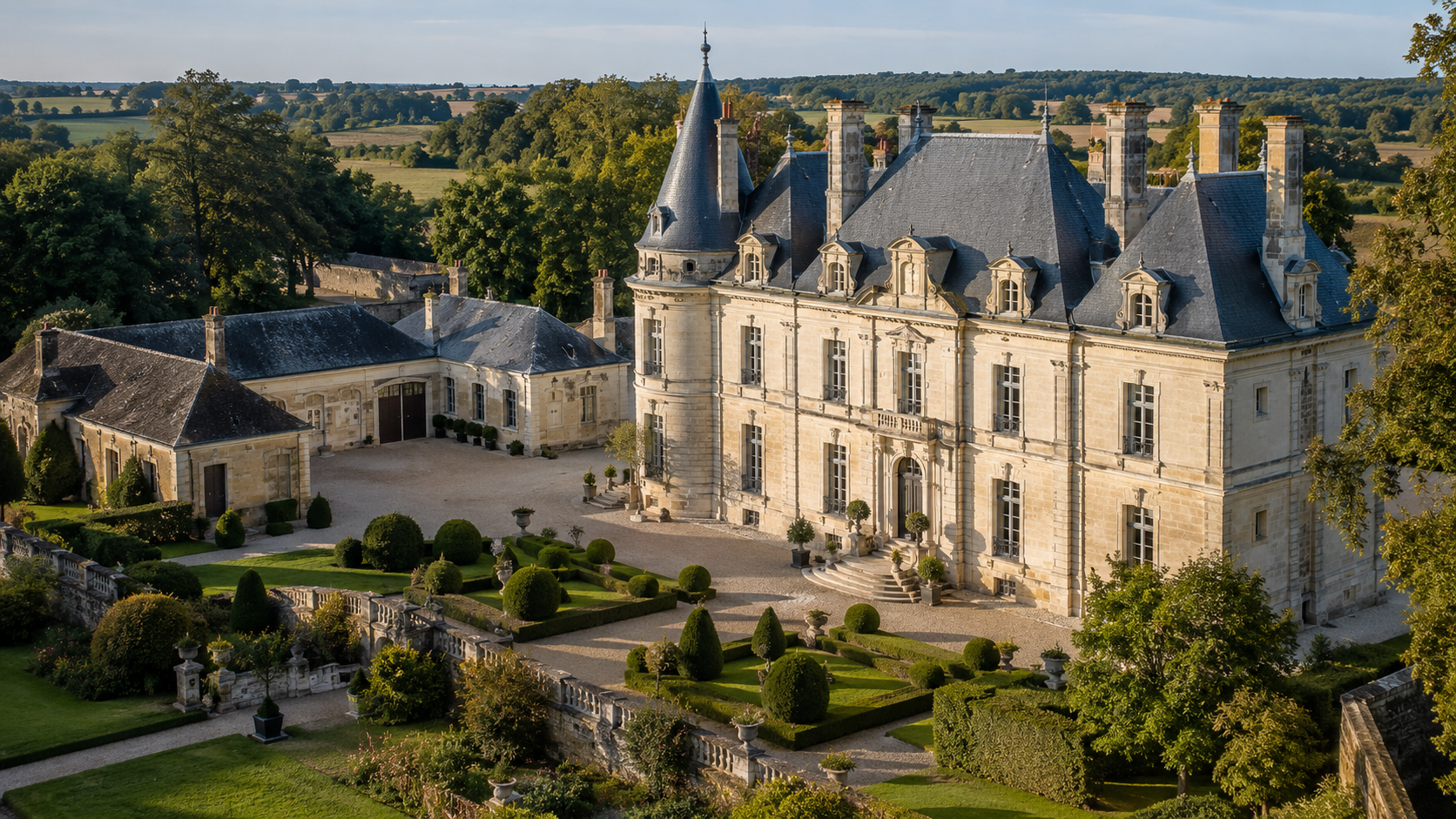
How Much Does It Really Cost to Own a Château in France?
One of the most surprising aspects of the French property market is that it is sometimes possible to buy an extraordinary château for the price of an apartment or townhouse in a major international city.
But the purchase price tells only part of the story.
For international buyers considering a château in France, understanding the ongoing cost of ownership is just as important as negotiating the acquisition price.
How much does a château cost in France?
There is no single answer.
French châteaux can range from substantial renovation projects to fully restored estates worth several million euros.
Location, architecture, condition, land, outbuildings and historical significance all influence the asking price.
A lower purchase price can sometimes indicate significant future expenditure.
For this reason, buyers should always consider the total financial commitment rather than focusing exclusively on the advertised price.
Heating a French château
Heating is often one of the largest operating costs.
Historic châteaux were not designed according to modern energy-efficiency standards.
They may contain:
very large rooms;
high ceilings;
thick stone walls;
single-glazed windows;
multiple staircases;
and areas that are rarely occupied.
Heating systems vary enormously and may include oil, gas, electricity, wood, heat pumps or geothermal systems.
Before buying, ask for historic energy bills where available and understand exactly which parts of the château are heated throughout the year.
Roofs can be a major expense
The roof is one of the first areas I look at when assessing a château.
A large slate roof, towers, dormer windows, chimneys and decorative zinc work can be expensive to repair.
A château with a recently restored roof may therefore represent better value than a cheaper property requiring substantial structural work.
Always look beyond the interior decoration.
Maintaining the grounds
Large estates require regular maintenance.
Ten or twenty hectares can look spectacular in photographs, but the land still needs to be managed.
Depending on the property, annual maintenance may involve:
mowing;
pruning;
tree management;
woodland;
driveways;
fences;
lakes or ponds;
swimming pools;
and formal gardens.
Some château owners employ full-time staff.
Others work with gardeners and contractors periodically throughout the year.
Outbuildings also need maintenance
Guest houses, stables, barns, gatehouses, chapels and former agricultural buildings can dramatically increase the potential of an estate.
They also create additional maintenance responsibilities.
Every additional building has a roof, walls, windows and infrastructure that may eventually require attention.
When assessing a château, ask yourself whether each outbuilding contributes to your project or simply creates additional cost.
Insurance and French property taxes
French property owners should also budget for insurance and local property taxation.
The taxe foncière varies according to the property and location.
For a large historic estate, specialist insurance may also be advisable.
These costs should be understood before completing the purchase.
Build a renovation reserve
Even a beautifully restored château will require ongoing maintenance.
Historic buildings continually evolve.
Roof repairs, plumbing, heating systems, painting, stonework or drainage may require attention over time.
Maintaining a financial reserve for future work can make ownership considerably more comfortable.
The most important question
The question should not simply be:
“Can I afford to buy this château?”
The better question is:
“Can I comfortably own and maintain this property for the next ten or twenty years?”
A château should enhance your lifestyle rather than become a financial burden.
Understanding the real running costs before purchasing is one of the best ways to ensure that happens.
Considering buying a château in France?
If you are evaluating a French château or estate, I can help you analyse the property beyond the asking price and identify the practical questions worth asking before making an offer.